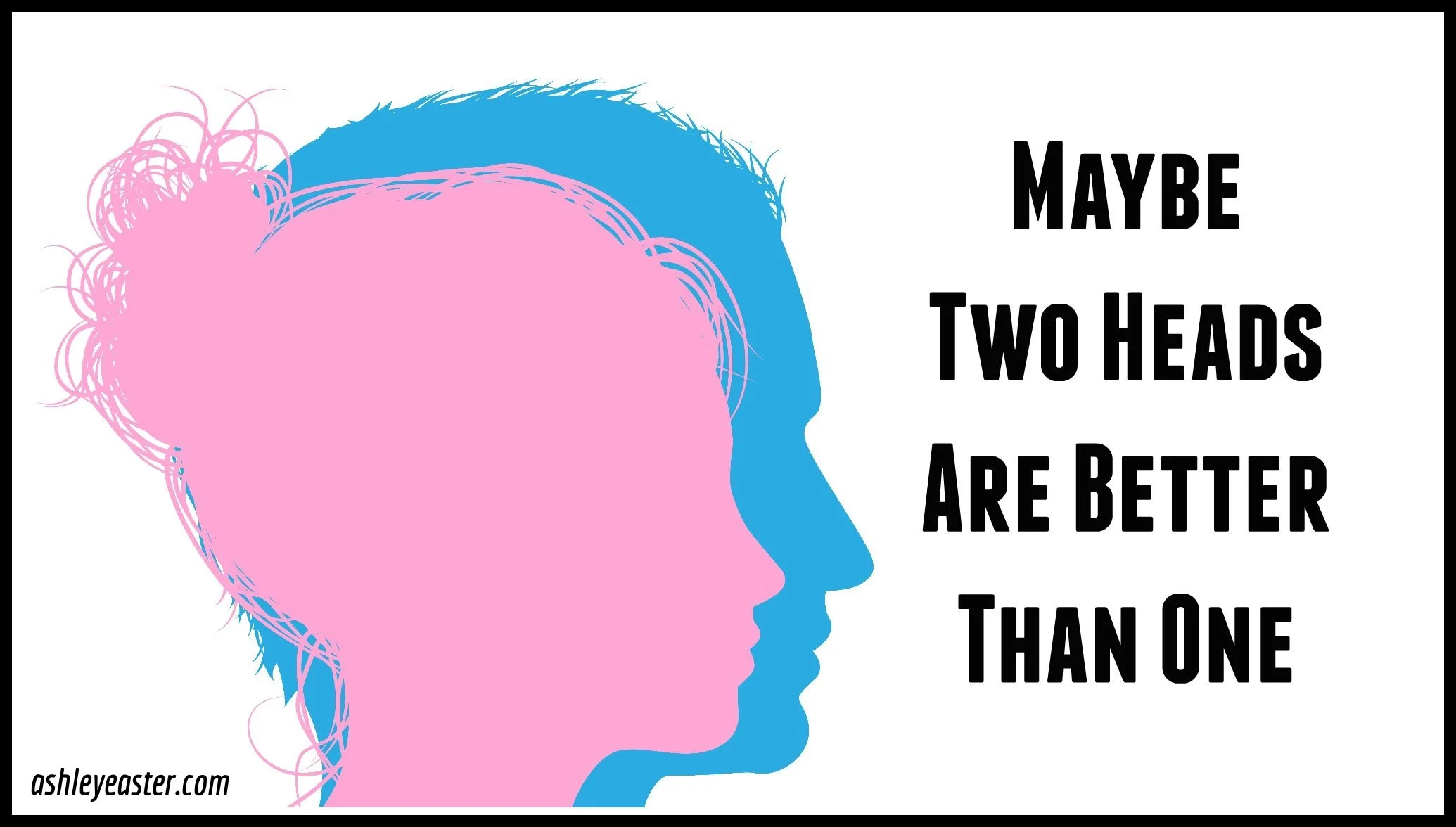
Why two heads are often better than one
If you’ve already hired a story or trial consultant, it’s a fair question: why bring in a settlement documentary filmmaker too? Isn’t that the same job? Twice?
It isn’t — but the answer is more layered than “we do different things, stay in our lanes.” The truth is, a documentary filmmaker is a kind of story consultant. Just one who builds the narrative differently: not from a deposition transcript or an intake form, but from days spent inside a client’s actual life, watching what they don’t think to mention.
Here’s a breakdown of what each professional does, where the real objections come from, and how the two roles genuinely strengthen each other instead of duplicating or competing with each other.
“Wait — isn’t that the same job?”
I’ll answer the question with another question: is a screenwriter the same as a director? Is a director the same as a film editor?
In movies, everyone technically serves the screenwriter — but a screenplay is always up for interpretation. A director is trusted because their read on the material is both reliable and the strongest possible version of it. Their basic job is to take the raw ingredients and organize them into narrative shape, and then hand it to an editor who visually rewrites it into the best version of that story available. Editing is often called the last draft of a screenplay for exactly this reason. It’s inevitable — and it’s true of documentary filmmaking too.
In this analogy, the client is the screenwriter. The attorney and trial consultant are the directors. And a settlement filmmaker is the cinematographer and editor — but a cinematographer who’s also doing story work, because in documentary filmmaking those roles were never fully separable to begin with.
A trial or story consultant works with you and your client, in tandem with the parameters of the law — depositions, witness prep, opening and closing structure, how your client will sound and hold up under questioning. Their job is to build the narrative spine of the case: the arc, the theme, the through-line that makes a jury or adjuster understand why this case matters.
A filmmaker works with your client’s life, on camera — creating a permanent visual record, and giving your client a chance to present their story in their own words, supported by experts and evidence, in layperson’s language, not the yes/no shape of a deposition. That’s a fundamentally different output: not preparation for a moment in a room, but an artifact that does the telling when no one’s in the room — for a mediator reviewing a settlement package, an adjuster who will never meet your client, or, if the case goes that far, a jury seeing a home, a routine, a struggle that no amount of testimony fully conveys.
But what’s easy to miss is that a filmmaker often spends more uninterrupted, unstructured time with the client and the experts than anyone else on the team, we end up with insight into the case that goes beyond what any intake brief captures. We’re not just executing someone elses narrative frame — we’re in a position to enrich it, sometimes to challenge it, and occasionally to discover something in it that nobody else was positioned to see.
The budget conversation: how to justify two line items
This is usually the real objection underneath the “isn’t that redundant” question — not confusion about roles, but a harder conversation with a partner or a client about spending case funds twice.
Reframe it this way: you’re not paying for two versions of the same protection. You’re paying to close two different gaps.
- Skip the consultant, and you risk a client whose testimony feels flat, disorganized, or inconsistent under pressure — even if the visual evidence is powerful.
- Skip the film, and you risk a beautifully prepared witness whose story never reaches the adjuster or mediator who’s deciding the number before anyone testifies. Most decision-makers who set the actual settlement value never sit in a room with your client at all.
The math isn’t “cost times two.” It’s “risk avoided times two” — and each dollar is protecting against a different way the case falls short of its value.
Discovery, not a shot list — why a skilled settlement documentary filmmaker stays open on set
Here’s something that separates this kind of settlement documentary work from ordinary legal videography, and it matters for how you think about coordination: showing up with a rigid, pre-determined shot list and refusing to deviate from it is one of the biggest mistakes a filmmaker can make on this kind of project.
It’s true that we take the consultant’s narrative frame seriously — the themes, the core facts, what the case is really about — and we keep an eye out for moments that support and enrich those themes. But we also have to stay open to discovering elements no one anticipated, because the most persuasive moments in a person’s life are almost never the ones they think to mention on their own. People adapt. They stop noticing their own daily struggle because it’s just Tuesday to them. A consultant working from conversations and depositions can only work with what the client thinks to say. A filmmaker who spends real, unhurried time in a client’s home and routine is often the only person on the team positioned to catch what the client has stopped seeing in themselves.
Documentary photographer Matthew Genitempo put it better than I could, talking about his own process on the Small Photobook Cult podcast: “The subject will destroy your intentions and use you to manifest its reality.” That might feel like a loss of control, but to a professional filmmaker, it’s the entire point. A documentary almost never turns out exactly how you expected going in, and that unpredictability is where the art lives, and almost always where the real human connection lives too. For a lawyer, that kind of spontaneity-readiness can sound risky. For storytelling, it’s the difference between a film that illustrates a legal theme and a film that actually moves – or in terms lawyers might be more familiar with, persuades – someone.
A real example
I once filmed a client who’d been left partially paralyzed from the neck down after a case of medical neglect. Her tenacity was extraordinary — she insisted on doing things herself whenever she possibly could, even when it was excruciating, like getting dressed on her own. I spent three days with her. On one of those days, I captured roughly two minutes of her trying, and struggling, to put on her own sock.
She had never mentioned this struggle to anyone on the legal team. It was so routine to her — something she fought through every single day — that it hadn’t occurred to her that it was worth saying out loud. We left that clip in, essentially unedited. It was devastating and quietly persuasive in a way no testimony could have replicated, and it played a real role in the case settling the night before trial.
If I’d walked into her house for a few hours with a fixed shot list built entirely from someone elses narrative brief, we would never have caught it. That’s the case, made plainly, for why staying open on a settlement documentary shoot isn’t a lack of discipline — it is the discipline.
What actually goes wrong when there’s no coordination
The problem is never having multiple professionals involved. The problem is having lawyers, consultants, and filmmakers who never talk to each other.
Picture the failure modes:
- The consultant builds a narrative arc around one theme. The film, shot separately with no visibility into that arc and no room to discover anything beyond it, ends up emphasizing something else entirely — and now your demand package feels like it’s telling two different stories, or worse, falls flat and feels fake.
- A settlement documentary or DITL filmmaker brought in too late, or handed a rigid shot list instead of context, misses the star witness or the quietly devastating detail — like a sock — because nobody told them to stay open, or nobody gave them the time and budget to find it.
- The client answers the same painful background questions twice, once for each professional, retraumatizing them, because neither team knew what the other had already covered.
None of this is inherent to having both. It’s what happens when nobody’s communicating and coordinating.
Who “owns” the story? Clarifying roles before day one
The fix is simple, and it’s something you can set up in a single call before either professional starts:
- The consultant defines the narrative frame — the theme, the arc, the core facts that matter most.
- The settlement documentary filmmaker uses that frame as a compass, not a script — going in with a clear sense of what the case is about, while staying genuinely open to what the days on set reveal.
- Both parties get looped in on major decisions (what to emphasize, what to leave out, how the client is being asked to talk about their injury) so nothing conflicts later.
- All parties stay open to the narrative details shifting and coming more into focus in the light of new information.
This isn’t a territory split that diminishes either role — it’s the same division of labor a well-run production always has, and it’s the attorney’s job (or the vendors’, if they’re good at their jobs) to make sure it happens early instead of by accident.
Protecting privilege and work product when more than one outside professional is involved
It’s a legitimate concern: every additional outside consultant is another person with access to sensitive case material. The way to handle it isn’t to avoid the second vendor — it’s to structure the engagement properly from the start.
That means clear, separate engagement letters or NDAs for each professional, explicit agreement on what materials get shared and with whom, and — where relevant — structuring the consultant’s role to preserve non-testifying-expert work-product protections. This is a conversation worth having with your own counsel on the specifics of your jurisdiction, but the short version is: coordination between vendors doesn’t require blanket, unstructured access to everything. It requires the same disciplined information-sharing you’d expect from any outside expert on the case.
Will it look “produced”? The admissibility and authenticity question
There’s a real fear here, and it’s not unreasonable: that a “produced” film, made in coordination with a narrative consultant, will look staged — polished in a way that invites a harder cross-examination or gets challenged on foundation.
The opposite is usually true when it’s done right. Coordination doesn’t mean scripting your client’s answers. It means the filmmaker knows what actually matters to the case before they start filming, so the footage that gets kept is the footage that’s genuinely probative — real moments that support the themes the consultant already identified as true and central, not padding shot on a guess. A film built with no narrative guidance at all is more likely to wander into material that looks arbitrary or prejudicial, precisely because nobody was thinking about what the footage needed to prove.
What it actually costs to skip one of the two
Cases where a well-prepared witness suffer when they had no visual reinforcement for a mediator who never met them in person. Cases where a striking film suffer when they had no narrative frame guiding it, ending up an emotional but unfocused watch that didn’t tie clearly to the legal theory of damages. Predictable result of stopping at just one half of the work.
A 5-minute coordination checklist for your next case
Something you can use immediately, or hand to a paralegal:
- Get both professionals collaborating looped in on story conversation, early — before either starts work, not after.
- Ask your consultant to share the core narrative themes on a call ideally, and in writing (for reference), with the filmmaker before filming begins — as a frame to build from, not a script to follow.
- Give the filmmaker real time, not just a few hours — the moments worth keeping are rarely the ones anyone thought to schedule.
- Set a single point of contact on your end to keep both vendors aligned on timeline and messaging. Don’t leave either of them floating without communication.
- Review the footage and the narrative frame together, once, before anything goes into a demand package or mediation brief — not separately.
Two professionals, one story, no wasted motion. Two heads are always better than one.
Want to set up a call to discuss your case and introduce your story consultant to us to see if we’re a good match? We’d love to hear from you. Schedule a call with us or send us a message.
Leave a Reply